
Constitutional Herbalism vs Symptom Matching: Why Your Friend’s Cough Remedy Won’t Work for You
- Roland Koronya

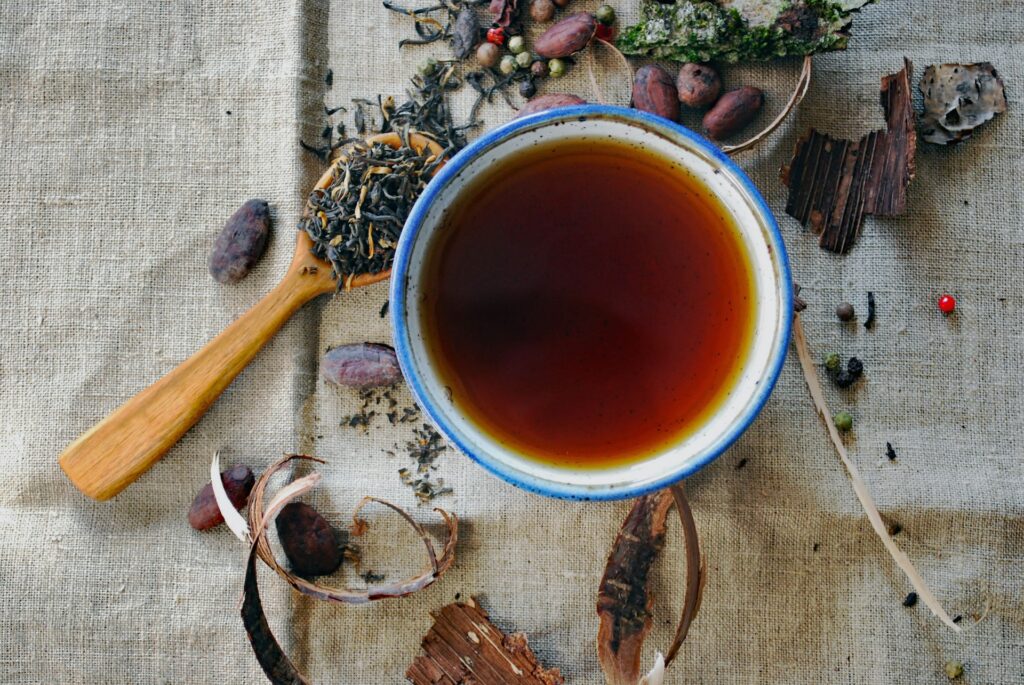
Your friend swears by the elderflower and thyme tea that cleared her cough in three days. She gives you the recipe, you brew it exactly as instructed, drink it faithfully, and… nothing. If anything, you feel worse. Your throat grows dryer, more irritated, the cough more persistent. What went wrong?
Nothing went wrong. Everything, actually, went exactly as it should have—which is precisely the problem.
Here’s what happened: Your friend had a cold, damp cough—thick mucus, heavy congestion, the kind that sits in your chest like wet cement. The warming, drying herbs in that blend (thyme’s aromatic pungency, elderflower’s gentle astringency) were perfect for her situation. They dried the dampness, stimulated circulation, moved the stagnation. For her body, in that moment, with that particular pattern of imbalance, those herbs were exactly right.
But you? You have a hot, dry cough. Irritated throat, little to no mucus, the kind of cough that feels like sandpaper scraping with each breath. When you drank that same warming, drying tea, you poured fuel on fire. You dried out tissue already parched. You added heat to a system already inflamed. The herbs worked perfectly—they did precisely what they’re supposed to do. They just weren’t supposed to do it to you.
This is the difference between symptom matching and constitutional herbalism. And understanding it changes everything.
The Allopathic Trap
Open most herbal reference books, search for “cough” in the index, and you’ll find a list. Expectorants, they’re called. Herbs that support the cough reflex, promote expectoration, help clear the lungs. The list might include licorice, marshmallow, elecampane, osha, lomatium, thyme, mullein. Scan any popular herbalism website and you’ll see similar groupings: “10 Herbs for Coughs,” “Best Natural Cough Remedies,” “Herbs That Stop Coughing.”
This approach seems helpful. Organized. Scientific, even. You have a cough, you look up cough herbs, you pick one. Simple.
Except it’s not herbalism. It’s what herbalists call “green allopathy”—using plants as if they were pharmaceutical drugs, matching symptom to substance, one-to-one. Take this for that. It’s the medical model in plant form, and it misses the entire point of traditional herbal medicine.
The problem isn’t the herbs. The problem is the question. “What herb is good for coughs?” is the wrong question entirely. The right question is: “What kind of cough does this particular person have, what underlying pattern is creating it, and which herbs match both the imbalance and the individual?”
Suddenly we’re not talking about one remedy. We’re talking about precision.
Two Coughs, Two Worlds
Let’s stay with coughs a moment longer, because they illustrate the principle so perfectly. Traditional herbalists recognize that not all coughs are the same—not even close. The word “cough” describes a symptom, not a condition. Behind that symptom lie patterns, and those patterns tell you everything.
The Hot, Dry Cough: Irritated, sensitive tissues. Burning sensation in throat and chest. Little or no mucus production. Hacking, unproductive cough that worsens with deep breathing. The tissue state here is heat/excitation and dry/atrophy. The mucous membranes are inflamed, hypersensitive, parched. What they need is cooling and moistening. Licorice root, marshmallow, slippery elm—demulcent herbs that soothe inflamed tissue and restore moisture. These herbs feel like silk on sandpaper.
The Cold, Damp Cough: Heavy, productive, phlegmatic. Thick mucus, sometimes clear, sometimes yellow or green. Feeling of congestion, heaviness in the chest. This represents damp/relaxation tissue state. The tissues are waterlogged, sluggish, unable to clear accumulation efficiently. What’s needed here is warming, drying, stimulating. Thyme, elecampane, osha—aromatic, pungent herbs that dry dampness, stimulate circulation, promote expectoration. These herbs move what’s stuck.
Give the hot, dry person warming expectorants and you’ll aggravate the heat, further dry the tissues, intensify the irritation. Give the cold, damp person cooling demulcents and you’ll increase the stagnation, worsen the congestion, prolong the condition. Same symptom. Opposite remedies. This is why your friend’s formula didn’t work for you.
What Constitution Actually Means
The word gets thrown around a lot in alternative health circles—constitution, constitutional type, constitutional pattern. Often vaguely, as if it’s self-evident. But constitution is specific, observable, predictive.
Your constitution is your baseline—the fundamental pattern of qualities that characterize your body and being. Not what you have but what you are. Some people run hot; they flush easily, prefer cool weather, tend toward inflammation and irritation. Others run cool; they’re always cold, crave warmth, prone to sluggishness and poor circulation. Some people are dry—thin, light, quick-moving, with dry skin and hair. Others are damp—heavier build, good endurance, tendency toward water retention.
Ayurveda organizes this into doshas: vata (dry, light, mobile), pitta (hot, sharp, intense), kapha (cool, heavy, stable). Traditional Greek medicine used the four humors: sanguine, choleric, phlegmatic, melancholic. Physiomedicalists speak of tissue states: hot/cold, damp/dry, tense/lax. Different languages, same recognition: people are not interchangeable. Bodies express distinct patterns, and those patterns shape how disease manifests and how medicine works.
Think of it as ecosystem versus machine. The machine model says: identify the broken part, fix the broken part. The ecosystem model says: understand the environment, recognize the pattern of imbalance, restore equilibrium. One approach replaces components. The other adjusts conditions.
Why This Matters Practically
Here’s where it gets interesting for the home herbalist. You don’t need to become an expert in Ayurvedic diagnosis or tongue reading or pulse assessment to begin working constitutionally. You just need to pay attention differently.
Instead of asking “What herb helps with insomnia?” ask: “Is this insomnia from a hot, agitated mind that can’t settle? Or from cold deficiency and exhaustion? Is there dryness and restlessness, or dampness and lethargy?”
Instead of searching for “digestive herbs,” notice: “Is my digestion too hot—acid reflux, burning, sharp pains? Or too cold—no appetite, sluggish, bloating? Am I too dry—constipation, hard stools? Or too damp—loose stools, heavy feeling?”
The symptoms might look similar on the surface. The underlying patterns are opposite. And the remedies that address them are opposite too.
A person with hot, sharp digestive pain needs cooling bitters—gentian, dandelion, perhaps some soothing marshmallow. Someone with cold, weak digestion needs warming aromatics—ginger, fennel, cardamom. Mix them up and you make things worse, not better. But match them correctly and you don’t just suppress symptoms—you address the actual imbalance creating those symptoms.
This is why traditional formulas often seem so specific. Not “the digestive formula” but formulas for specific patterns: hot/damp digestion, cold/dry digestion, tense/spastic digestion, relaxed/atonic digestion. Each pattern requires different herbs, different energetics, different approaches.
The Vitalist Difference
There’s a deeper philosophical point here worth understanding. Constitutional herbalism isn’t just more precise symptom matching—it’s a fundamentally different paradigm.
The allopathic approach, even when using herbs, treats the body as if it’s passive, broken, requiring external intervention to force it back to function. You have inflammation, so you suppress inflammation. You have infection, so you kill pathogens. You have pain, so you block pain signals. The body is the problem; the medicine is the solution.
The vitalist approach—and constitutional herbalism is inherently vitalist—recognizes the body’s intelligence. Your fever isn’t the enemy; it’s your immune system working. Your inflammation isn’t malfunction; it’s response to irritation. Your symptoms aren’t arbitrary errors but meaningful signals about underlying patterns.
Constitutional herbalism works with that intelligence, not against it. It reads the symptoms as language, deciphers the pattern they reveal, selects herbs that support the body’s attempt to restore balance rather than suppressing its adaptive responses. This is why traditional herbalists speak of “removing obstacles to cure” rather than “fighting disease.” The body knows how to heal. Your job is to create conditions that allow it.
When you give warming herbs to someone whose system is cold, you’re not suppressing cold symptoms—you’re providing the warmth that allows their system to function properly again. When you give cooling herbs to someone whose tissues are overheated, you’re not masking inflammation—you’re addressing the excess heat that’s creating it. The herbs don’t override the body’s wisdom. They participate in it.

Learning to See Patterns
So how do you develop this constitutional awareness without years of training? Start by observing yourself.
Notice your baseline. Do you typically run hot or cold? Are you generally dry (thirsty, dry skin, tendency toward constipation) or damp (water retention, heavy feelings, loose stools)? Are you tense (tight muscles, high strung, reactive) or relaxed (loose, lackadaisical, low muscle tone)?
Then notice how you respond to things. Hot weather—does it energize you or drain you? Cold weather—refreshing or unbearable? Spicy food—do you crave it or does it cause problems? These aren’t personality quirks. They’re constitutional information.
When illness arrives, observe its quality. Is your cold accompanied by heat (fever, burning throat, red face) or cold (chills, pale complexion, low energy)? Is there excess moisture (runny nose, productive cough, watery eyes) or dryness (dry cough, thirst, dry skin)? These details aren’t incidental. They’re diagnostic.
And here’s what becomes fascinating: once you start seeing these patterns, you notice them everywhere. You realize why you instinctively crave certain foods in certain seasons. Why some herbs in your cabinet you reach for repeatedly while others sit unused. Your body already knows its constitution. You’re just learning to listen.
The Practical Takeaway
Next time someone recommends their miracle remedy—the tea that cured their headache, the tincture that solved their insomnia, the herb that transformed their digestion—thank them. Note the information. Then ask yourself: Is my pattern the same as theirs?
If your headache is pounding, hot, sharp (pitta/heat pattern), their cooling peppermint tea might help. But if your headache is dull, heavy, congestive (kapha/damp pattern), that same tea might worsen it. You’d need something warming and stimulating instead—rosemary, perhaps, or a bit of ginger.
This isn’t complicated once you grasp the principle. It’s just pattern recognition. Hot conditions need cooling herbs. Cold conditions need warming herbs. Dry conditions need moistening herbs. Damp conditions need drying herbs. Tense conditions need relaxing herbs. Relaxed conditions need toning herbs.
The herbs haven’t changed. The symptoms haven’t changed. What’s changed is the question you’re asking. Not “What herb is this good for?” but “What does this person need, and does this herb provide it?”
That shift—from symptom to pattern, from generic to constitutional, from allopathic to vitalist—that’s what transforms herbalism from hit-or-miss guesswork into precise, reliable medicine. The kind of medicine that’s worked for thousands of years across every culture that bothered to pay attention.
And it starts by recognizing that your friend’s cough remedy won’t work for you because it was never meant to. It was meant for her cough, her pattern, her constitution. Which frees you to find yours.
These patterns—constitutional assessment, tissue state recognition, energetic matching—are what we explore thoroughly in our Herbal Actions Mini-Course, learning to see beyond symptoms into the underlying ecology of the body. Not as abstract theory but as practical skill, the kind of pattern recognition that makes herbalism work reliably rather than randomly. Because once you understand why your friend’s remedy didn’t work for you, you’re finally ready to find the ones that will.