
Elderflower: The European Hedge Medicine Hiding in Plain Sight
- Roland Koronya

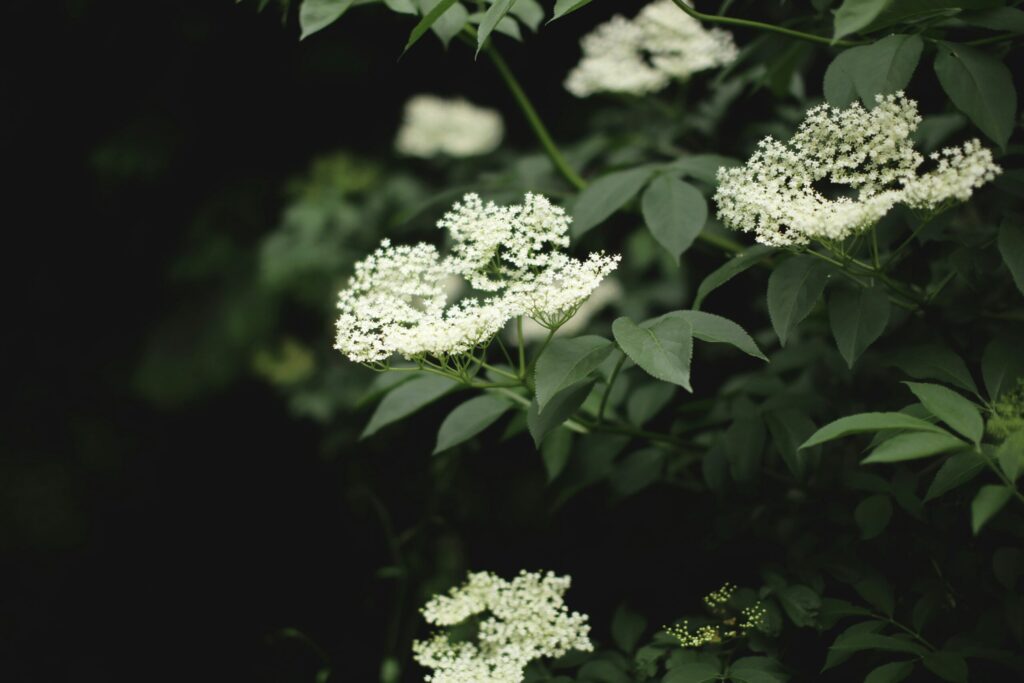
Sambucus nigra (European elder) | Sambucus canadensis (American elder)
Family: Caprifoliaceae (Honeysuckle family)
There’s a particular moment in late May when you notice them—great creamy umbels floating like risen moons above the hedgerows, filling the damp, spring air with something between honey and muscat wine. If you’ve lived in the countryside for any length of time, you’ve walked past elder a thousand times without seeing it. It grows in ditches and forest edges, along creek sides and forgotten corners, so common it becomes invisible. Which is precisely how the most valuable medicines hide: in plain sight, waiting to be remembered.
The ancient Britons knew. The Romans who occupied their land knew. Every monastery garden across medieval Europe knew. Hippocrates wrote about it. Dioscorides catalogued it. In 1644, a German physician named Martin Blochwich compiled a 230-page volume—Anatomia Sambuci—documenting elder’s use for seventy different diseases. Seventy. For a single plant growing wild in every hedgerow.
Then we forgot. Or rather, we stopped looking.
The Plant Itself
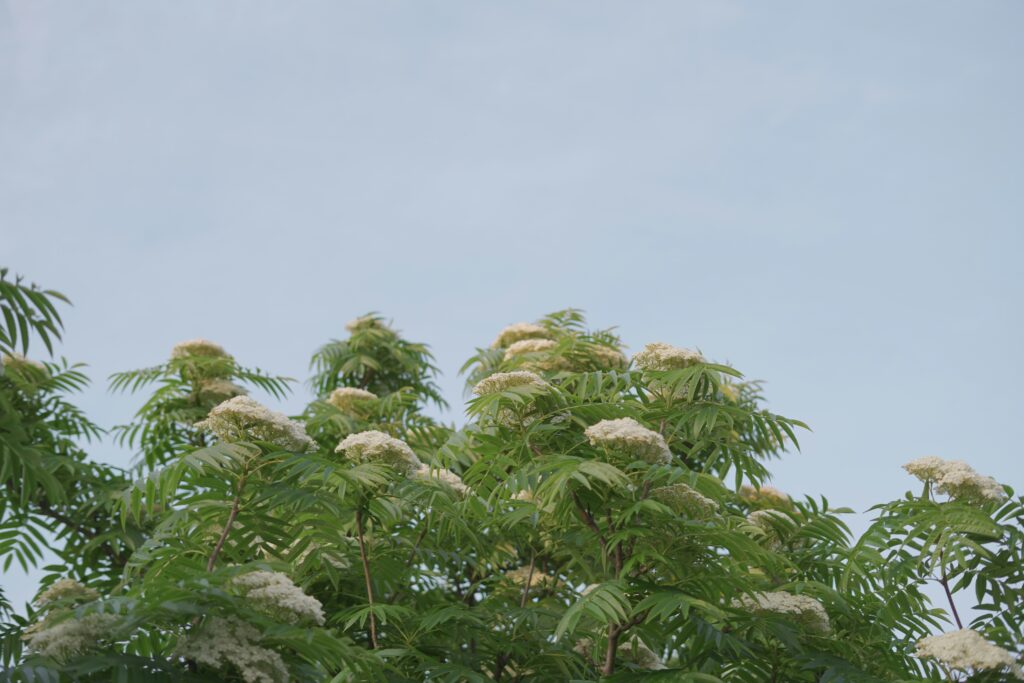
Elder is a study in contradictions—simultaneously tree and shrub, delicate and hardy, elegant and scrappy. It survives in zones 3 through 8, tolerating poor soil and partial shade though it prefers nitrogen-rich earth and sun. The shallow root system means it damages easily, yet the plant itself persists through centuries, regenerating from even brutal pruning.
The flowers arrive in late spring or early summer depending on where you are, clustered in flat-topped umbels that can span twenty centimeters. Creamy white, occasionally with the faintest blush of pink, five tiny petals each forming a perfect star. The scent is distinctive—floral but not cloying, sweet but complex, with an undercurrent that some describe as muscat, others as elderflower, a scent so particular it defies comparison.
Those flowers matter for identification. Unlike poison hemlock’s umbels, which form a rounded dome, elderflower umbels sit flat or slightly domed. Unlike wild carrot, which has a single dark floret at the center, elderflower spreads uniformly white. These distinctions keep you alive. Pay attention.
Energetic Signature: Reading the Medicine
Before laboratories taught us to think in constituents, herbalists learned to read plants through direct observation. Taste elderflower—make a simple tea, let it cool slightly, taste without sweetener. You’ll notice bitterness first, gentle but present. Then something faintly sweet underneath. The overall effect feels cooling, drying, with an aromatic quality that opens and releases.
This taste tells you everything.
Cooling: Elderflower addresses heat—in fevers, in inflammation, in hot, irritated tissues. When your face flushes red with fever, when your throat burns with infection, when mucous membranes swell hot and angry, elderflower’s cooling nature brings relief not by suppression but by redirection.
Drying: The gentle astringency and bitter quality indicate elderflower’s ability to tone tissues, reduce excess secretion, dry damp conditions. Yet it accomplishes this without the harsh drying that leaves tissues parched. A skilled hand, tightening and toning with precision.
Diaphoretic: Here’s where it gets interesting. Elderflower is cooling, yes, but it cools through heat—specifically, through inducing perspiration. When taken as a hot infusion during fever, elderflower opens the pores, brings blood to the surface, allows heat to escape through sweat. It’s paradoxical only if you think mechanically rather than ecologically. The body knows how to cool itself; elderflower simply facilitates the process.
Traditional Actions and Uses
For the Respiratory System: This is elderflower’s primary territory. Upper respiratory infections, colds, flu, sinusitis—conditions characterized by hot, inflamed mucous membranes, swollen tissues, excess secretion. The cooling anti-inflammatory action soothes irritated tissue. The drying quality reduces excessive mucus. The diaphoretic effect helps the body clear infection through heat release.
The traditional combination speaks to centuries of observation: elderflower, yarrow, and mint in equal parts. Each cooling, each diaphoretic, working in concert to address fever and respiratory distress. Add boneset if there’s deep aching in the bones. This isn’t guesswork; it’s pattern recognition refined across generations.
For Allergies: Some herbalists suggest starting elderflower tea before pollen season begins—not as acute treatment but as preparation, toning the mucous membranes, addressing the inflammatory response before it escalates. The cooling action on overreactive tissues, the gentle toning of membranes prone to swelling. Whether this works likely depends on constitutional factors and the specific presentation of allergic response.
Topically for Skin: Since Egyptian times, elderflower infusions have been used to reduce wrinkles, lighten age spots, soothe inflammation. The cooling quality addresses heat in rashes, eczema, sunburn. Infused in oil for diaper rash. As a hair rinse for scalp lesions. The anti-inflammatory and cooling actions translate across tissue types.
As Diuretic: The flowers gently increase urination, helping the body clear excess fluid and support kidney function. Not aggressive, not depleting, but facilitating normal elimination.
The Lore Worth Knowing
In the language of flowers, elderflower meant purification and love. Fitting for a plant sacred to Venus—delicate blooms, intoxicating scent, medicine that addresses both beauty and healing. Standing beneath an elder in full bloom, one almost feels the presence of the goddess herself, or so the old herbalists claimed. Perhaps they meant something simpler: that beauty and medicine need not be separate.
In Harry Potter, the Elder Wand holds the most powerful magic. In older European folklore, elder trees housed protective spirits—you asked permission before cutting, left offerings, showed respect. Whether you interpret this as superstition or recognition of a plant’s value, the message remains: this is not a common weed. This is an ally worthy of attention.
Preparation and Administration
Infusion (Tea): The standard preparation. Use 1-2 teaspoons of dried flowers per cup of just-boiled water. Cover immediately—those volatile oils that give elderflower its aromatic quality escape with steam. Steep 4-15 minutes depending on desired strength. Strain and drink hot for diaphoretic effect during fever, or cool for general use.
For acute respiratory infection or fever, prepare a traditional blend: equal parts elderflower, yarrow, and mint. Drink hot, several cups throughout the day. Wrap up warm. Expect to sweat.
Cold Infusion: For eye wash or gentle skin application, steep flowers in room temperature or cool water for several hours. Strain carefully. The cold preparation is less diaphoretic, more demulcent and soothing.
Tincture: Fresh or dried flowers in vodka or brandy, 1:5 ratio, macerate 4-6 weeks. The alcohol extracts constituents that water might miss, though for respiratory applications, the hot water infusion works beautifully on its own.
Vinegar: Fill a jar with fresh elderflowers, cover with apple cider vinegar, let sit for a month. The resulting vinegar is excellent for skin applications, hair rinses, or as a base for oxymels.
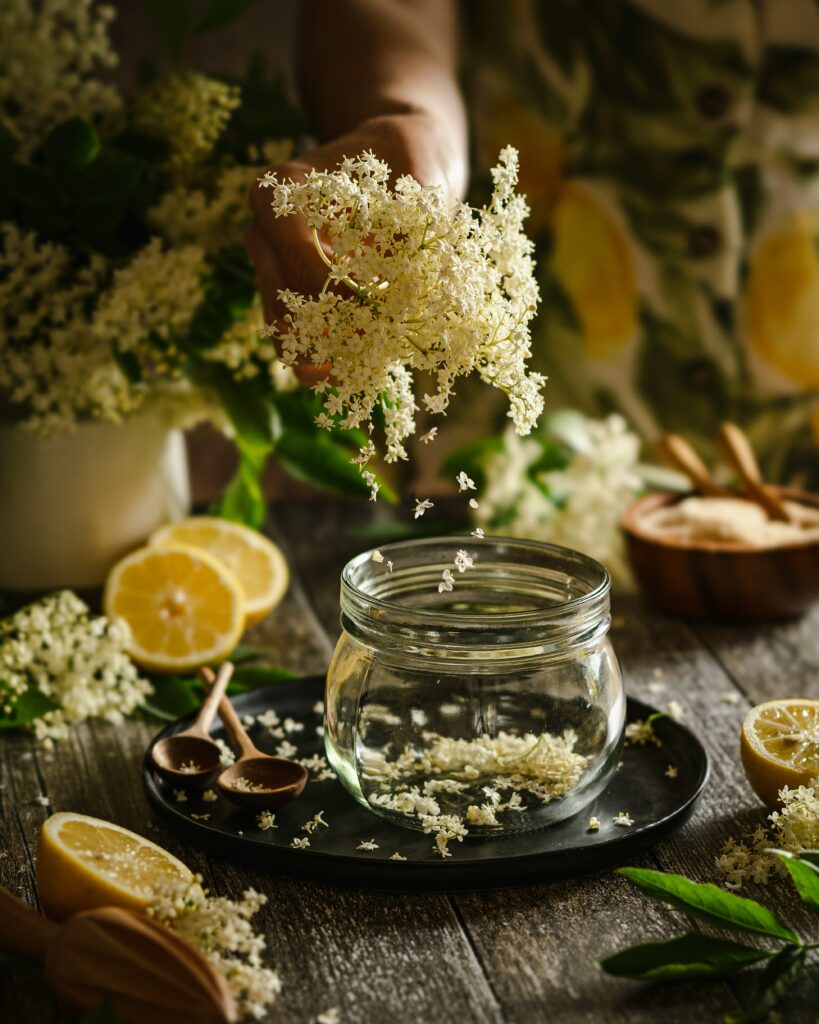
Elderflower Cordial: The traditional European preparation—flowers steeped with sugar and lemon to create a sweet syrup, diluted with sparkling water. Not strictly medicinal but not purely recreational either. The line between food and medicine, pleasure and healing, was always thinner than we pretend.
Dosage and Safety
Standard infusion dosage: 1-3 cups daily for acute conditions, 1 cup daily for general support or allergy prevention.
Tincture: 2-5 ml three times daily.
For children: Elderflower is considered safe and gentle for all ages. Reduce dosage according to body weight.
Contraindications: Very few. Some people with severe Asteraceae family allergies may react, though elderflower isn’t in that family—cross-reactivity is rare but possible. Otherwise, elderflower’s gentleness makes it suitable for most constitutions, most situations.
Important note: We’re discussing the flowers here. The stems, leaves, and unripe berries contain cyanogenic glycosides and should be avoided. The ripe berries are medicine in their own right but require cooking. The flowers, properly harvested (minimal stem), are safe.
What the Modern World Forgot
Here’s what gets lost in our enthusiasm for exotic herbs shipped from distant continents: the most reliable medicines often grow closest to home. Elderflower isn’t glamorous. It won’t be featured in wellness magazines with promises of miraculous transformation. It’s too common, too accessible, too ordinary to generate that kind of excitement.
But ordinary is precisely what makes it extraordinary. A plant so widespread, so resilient, so generous in its offering that every hedgerow in Europe holds pharmacy. No wildcrafting pressure because it grows everywhere. No ethical concerns about over-harvesting because elder regenerates vigorously. No supply chain issues because it’s right there, blooming in late spring, asking only that you notice.
The cooling relief it brings to fevered bodies, the gentle opening of congested passages, the soothing of inflamed tissue—this is hedge medicine at its finest. Not dramatic, not heroic, just reliably effective when you most need it. Which is perhaps the definition of a true ally: present, accessible, steadfast.
When you learn to see elderflower—really see it, beyond its commonness into its particular elegance—you begin to understand what bioregional herbalism means in practice. Not as ideology but as relationship. Not as trend but as tradition continuing. The plant that grows abundantly in your region grows there for reasons. Your body, adapted to that same environment, recognizes its medicine.
These old patterns of working with what grows near, of recognizing common plants as potent allies, of brewing simple teas that serve us through seasonal illnesses—this is what we return to slowly in our Herb Dossier. Not as nostalgia but as practice, learning to read plants through observation, taste, and direct relationship. Elderflower makes an excellent teacher: common enough to practice with freely, generous enough to forgive beginner mistakes, effective enough to build confidence. Begin here, with what grows in plain sight.