The Lost Art of Making Herbal Syrups
- Roland Koronya

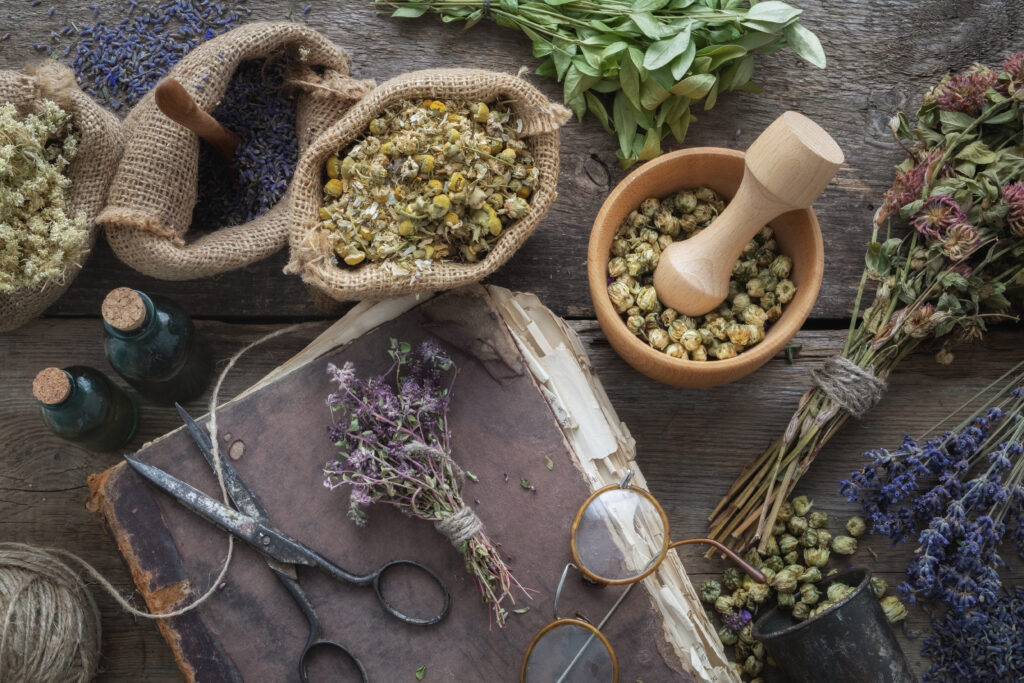
On a shelf in a Dutch herbalist’s workshop, tucked between tincture bottles and driedroot bundles, sits a dark amber jar labelled hoestsiroop — cough syrup. It’s thick, sticky, and smells faintly of thyme and liquorice root. Noor, the herbalist made it last autumn, when the first cold winds arrived, using a method her grandmother taught her: slow-simmered herbs, raw honey, and patience.
“People always ask if I sell it,” she tells me. “But I don’t make enough. It takes too long.”
She’s right. Proper herbal syrups — the kind European households once kept in their cupboards like insurance policies — are a dying breed. Not because they don’t work, but because almost nobody makes them anymore.
What We Lost When We Stopped Simmering
For most of European history, honey-based herbal preparations weren’t a niche craft project. They were essential household medicine. Before antibiotics, before cough drops, before you could pop into a chemist for a bottle of something vaguely mentholated, there was syrup. Thick, sweet, shelf-stable, and strong enough to cut through winter bronchitis or soothe a child’s sore throat at 2 a.m.
The method was simple: fresh or dried herbs, simmered low and slow in water to extract their medicinal compounds, then strained and combined with honey in careful proportions. The honey did more than sweeten. It preserved the preparation, coated inflamed tissues, and — as herbalists understood long before anyone studied it — carried its own antimicrobial properties.
What’s sold today under the label “herbal syrup” is usually something else entirely: a sugar solution with herbal extract added, or worse, a corn syrup base with a whisper of plant flavouring. The traditional process — labour-intensive, time-sensitive, and requiring actual honey — has been engineered out in favour of shelf life and scalability.
Honey Wasn't Just the Sweetener
Medieval European herbalists didn’t use honey because it tasted nice. They used it because it worked. Honey is hygroscopic, meaning it pulls moisture out of its environment — including out of bacteria and fungi, which makes it a surprisingly effective preservative. It also forms a protective film over mucous membranes, which is why honey-based syrups were the first line of defence for sore throats, dry coughs, and respiratory irritation.
Monasteries across Europe kept meticulous records of their herbal syrup recipes, often stored in stillrooms alongside distilled waters and salves. A 15th-century herbal from the Low Countries lists no fewer than twelve different syrup preparations, each tailored for specific complaints: syrup of hyssop for wet coughs, syrup of coltsfoot for dry ones, syrup of violets for feverish children.
The recipes weren’t arbitrary. They reflected centuries of observation about which plants paired well with honey’s qualities. Warming, aromatic herbs like thyme and hyssop. Demulcent roots like marshmallow and liquorice. Flowers like elderflower and violet, which were gentle enough for the very young and very old.
By the 18th century, even official pharmacopoeias included herbal syrups as standard preparations. They weren’t fringe folk remedies — they were legitimate medicine.
The Difference Between a Syrup and a Sugar Water
Making a traditional herbal syrup is not complicated, but it is particular. You can’t rush it, and you can’t fake it with shortcuts.
The process begins with a strong decoction or infusion, depending on the plant material. Roots and barks get simmered for 20 to 40 minutes to break down tough cell walls and release deep constituents. Leaves and flowers are infused more gently, often steeped off the heat to preserve volatile oils.
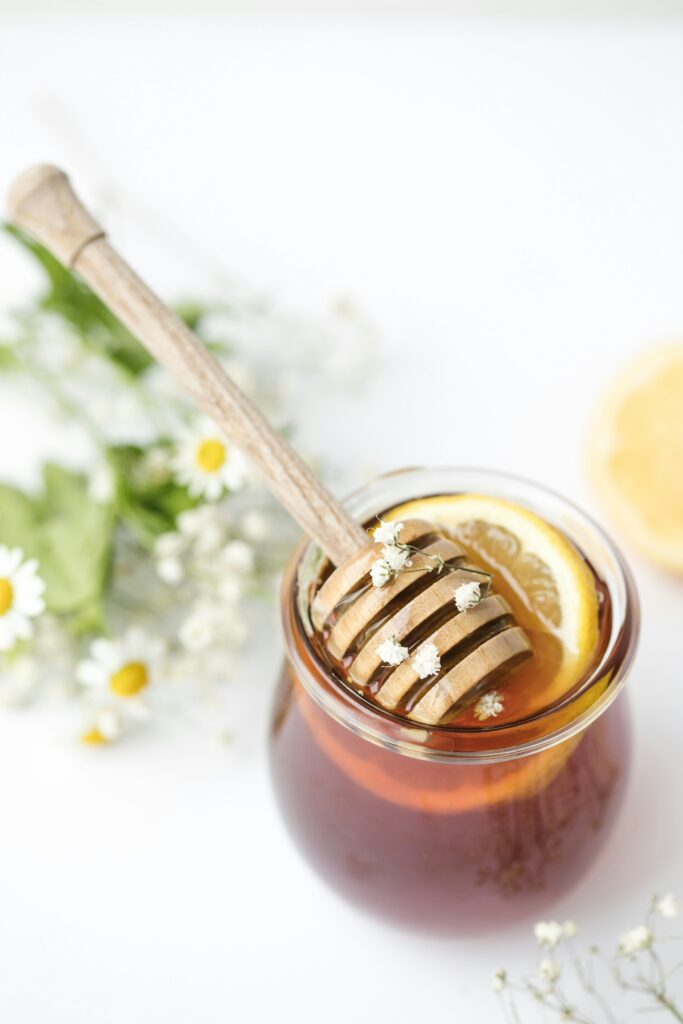
Once the liquid is strained, it’s reduced — sometimes by half — to concentrate the herbal compounds. Only then is honey added, typically in a 1:1 or 2:1 ratio of honey to herbal liquid, heated just enough to blend without destroying the honey’s enzymes.
The result is nothing like the corn syrup slurry you buy in a plastic bottle. It’s dense, aromatic, and potent. A spoonful coats your throat like a promise. It tastes like plants and intention.
Modern commercial “herbal syrups” skip most of this. They often start with a premade simple syrup, add herbal tincture or extract, maybe a drop of essential oil for fragrance, and call it done. It’s faster. It’s cheaper. It’s consistent. It’s also not the same thing.
Why We Stopped Making Them
The decline of herbal syrup-making isn’t mysterious. It’s the same story as most traditional food preservation: industrialisation made it obsolete, and convenience made us forget why it mattered.
By the early 20th century, pharmaceutical companies had begun synthesising cough suppressants and expectorants in pill and liquid form. They were standardised, fast-acting, and didn’t require an afternoon of stovetop simmering. Herbal syrups, once the backbone of home medicine, became quaint.
The other problem was honey itself. Real honey — raw, unfiltered, minimally processed — became expensive and harder to source as industrial beekeeping scaled up. Why spend money on good honey and hours making syrup when you could buy a bottle of something that sort of worked for a fraction of the price?
Even in herbalism circles, tinctures took over. Alcohol extracts are more concentrated, more shelf-stable, and faster to make. A tincture can sit in a cupboard for years without degrading. Syrups, even with honey, have a shelf life measured in months, not decades.
But something was lost in that trade-off. Tinctures are sharp, medicinal, and often unpleasant to take. Syrups are gentle, soothing, and psychologically comforting in a way that matters more than we like to admit when we’re ill.
The Quiet Resurgence
In recent years, a small number of European herbalists have started making traditional syrups again — not as a nostalgic exercise, but because their clients keep asking for them.
“I have parents who won’t give their kids tinctures,” a Belgian herbalist friend of mine Lotte, tells me. “Too strong, too alcoholic, even diluted. But a syrup? They’ll take it willingly. Sometimes that compliance is half the healing.”
She’s not wrong. Herbal medicine doesn’t work if people won’t take it, and syrups have an advantage tinctures will never have: they taste like care. A spoonful of elderflower and thyme syrup, warmed slightly and taken before bed, feels like being looked after. It slows you down. It asks you to pay attention.
There’s also a growing recognition that not all herbal preparations need to be maximally potent. Sometimes, a gentler extraction is better — especially for children, the elderly, or anyone with a sensitive system. Syrups occupy a middle ground between the mildness of tea and the intensity of tinctures.
What It Takes to Bring Them Back
If you want to make a proper herbal syrup, you need three things: time, good honey, and a willingness to accept that it won’t last forever.
That last point is the hardest for modern sensibilities. We’re used to buying things that sit in cupboards for years, unchanging. A traditional syrup might last three to six months in the fridge, maybe longer if you’re lucky. It’s a living preparation, and like all living things, it has a lifespan.
But that impermanence is also part of the point. Making syrups reconnects you to seasonal cycles. You make elderflower syrup in late spring when the blossoms are open. Thyme and hyssop syrup in late summer, before the first colds hit. Liquorice and ginger syrup in deep winter, when nothing else is growing.
It’s a way of practicing medicine that doesn’t separate the remedy from the rhythm of the year. And perhaps that’s what we lost when we stopped making them: not just a preparation method, but a relationship with time, seasonality, and the idea that healing doesn’t always need to be instant.
Noor with the amber jar closes the lid carefully and sets it back on the shelf.
“I could make more,” she says. “But then it wouldn’t be special anymore. And maybe that’s the problem — we forgot that some things should take time.”
Perhaps that’s what herbal syrups have to teach us in the end: not just how to soothe a cough or calm a restless child, but how to exist in a different relationship with medicine itself. One that asks us to notice the seasons, to sit with a simmering pot, to accept that some remedies are meant to be made fresh and used fully, not stored indefinitely against some future emergency. The jar on the shelf isn’t just honey and herbs. It’s a small protest against the idea that healing should be fast, cheap, and infinitely replicable.
If you’d like to explore how preparations like these fit into a broader understanding of European herbalism — the why behind the how — you’ll find a gentle starting point in our Herbal Foundations Course. It’s designed for anyone curious about building a practical relationship with plants, one quiet lesson at a time.