The Curious Case of Nettles: A Superfood, A Stimulant, A Sting
- Roland Koronya

If you grew up near a field, a ditch, or anywhere vaguely green, you probably remember nettles like this:
You brushed against them.
You yelped.
And for the next two hours, your skin buzzed with tiny electric welts.
Lesson learned: Don’t touch the fuzzy plant.
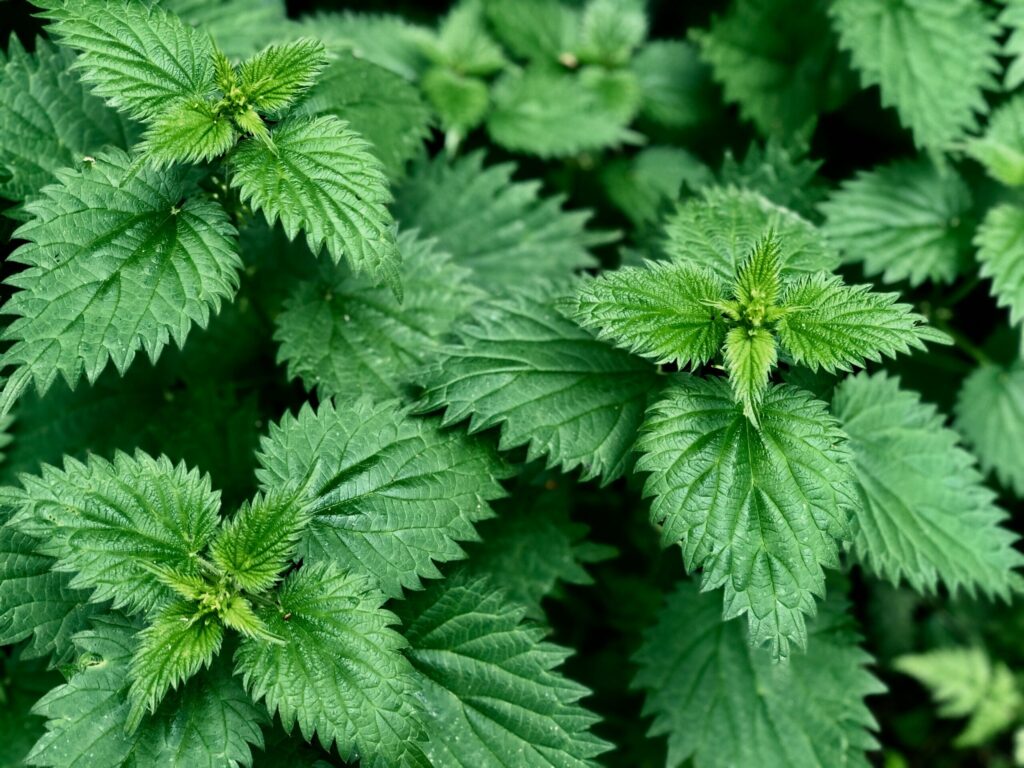
That was Urtica dioica, better known as stinging nettle.
But here’s the plot twist:
That same prickly menace that haunted your childhood is now showing up in detox teas, protein powders, allergy remedies, green juices, and Dutch farmer’s markets with a cult-like following.
It turns out nettles aren’t just a weed.
They’re a nutrient-dense powerhouse, a blood-moving stimulant, and in some cultures, even a therapeutic pain tool. (Yes, people deliberately sting themselves with nettles.)
So how did we get from “ow” to “wow”?
Let’s dig into the strange, stinging, and surprisingly useful life of the humble nettle.
Nettles: The Basics (and the Burn)
Let’s get scientific for a second.
Urtica dioica is a perennial plant native to Europe, Asia, and North America. It grows tall and aggressive—up to 2 meters—with serrated leaves and tiny needle-like hairs called trichomes.
Those trichomes are the sting factory.
Each one acts like a tiny hypodermic needle, injecting a combo of histamine, acetylcholine, serotonin, and formic acid into your skin. The result? That familiar zing-puff-itch feeling that has ruined countless childhood bike rides.
And yet, when prepared properly—or used intentionally—those same nettles turn into one of the most nutrient-rich, energizing, and medicinal herbs in the Western tradition.
Weird? Definitely.
But we’re just getting started.
Superfood Status: How Nettles Became the OG Green Powder
Long before kale got its PR glow-up, nettles were the original leafy overachiever.
Let’s compare 100g of fresh nettle leaves to a few common greens:
Nutrient | Nettle | Spinach | Kale |
Iron (mg) | 7.8 | 2.7 | 1.5 |
Calcium (mg) | 481 | 99 | 150 |
Vitamin C (mg) | 333 | 28 | 120 |
Protein (g) | 7.4 | 2.9 | 2.9 |
Yes, that’s more iron than spinach, more calcium than milk, and about 7x the vitamin C of an orange. In one plant.
Which is probably why nettles are now showing up in:
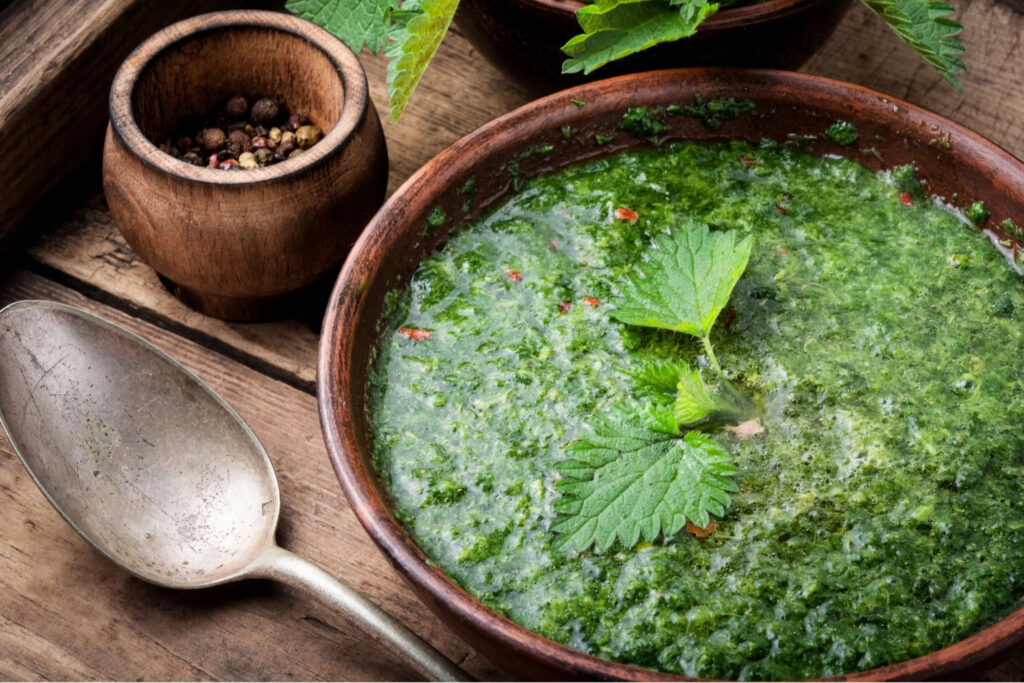
- Dutch farm-to-table cafes as soup
- Herbalist Instagram reels as green powder shots
- Prenatal teas (hello, iron and folate)
- Recovery smoothies for athletes
- And yes, allergy blends everywhere (we’ll get to that)
Nettles have officially crossed over from folk weed to functional food.
But nutrition isn’t the whole story.
A Natural Stimulant (Without the Buzz)
You’d think a “superfood” would be cooling and calming.
Not nettle.
Energetically, herbalists describe nettles as cool and drying—but also strongly stimulating. Not in the caffeine-jitter kind of way. More like: your blood moves. Your energy lifts. Your brain fog clears. Your kidneys get to work.
One of my herbalist friends in the Netherlands described nettles as:
“Like a green broom through the bloodstream and lymph.”
That’s vivid—and accurate. Nettles are known to:
- Support the kidneys and urinary system (mild diuretic effect)
- Promote elimination of metabolic waste
- Nourish and rebuild after fatigue or illness
- Support healthy circulation and reduce stagnation
Which makes nettle a strange paradox:
It’s gentle and nourishing, but also activating and tonifying.
It doesn’t sedate you. It wakes up your entire system—without the crash.
The Allergy Angle (And Why It Works)
Here’s where things get seasonal.
Every spring, people in the Netherlands brace themselves for graspollen, berkenpollen, and the whole airborne nightmare that comes with blooming trees.
And every year, more and more of them are reaching for nettle.
Here’s why:
- Nettle has natural antihistamine properties (especially when freeze-dried)
- It helps stabilize mast cells, reducing allergic responses
- It clears excess mucus from the upper respiratory tract
- It supports inflammation-modulating pathways without being harsh
Unlike over-the-counter allergy meds, nettle doesn’t knock you out or dry you up. It gently supports your system to calm itself down—while nourishing you at the same time.
Which is pretty wild, considering it’s the same plant that causes skin hives on contact.
The Sting as Medicine
Let’s talk about the weirdest part of nettle’s story.
In some folk traditions—including parts of Europe—nettles were (and still are) used intentionally to cause pain. The practice is called urtication, and it involves lashing or brushing sore joints or limbs with fresh nettles.
Why?
The sting brings blood to the surface. It stimulates circulation. It reduces pain perception. And in many cases, it actually relieves chronic joint pain, arthritis, or nerve discomfort.
Modern studies have confirmed what folk medicine already knew:
Topical nettle sting therapy can improve symptoms of osteoarthritis.
It’s counterintuitive.
But it works.
And it turns nettle into one of the only herbs that’s medicinal in two forms: dried and fresh-stinging.
You can’t say that about chamomile.
From Folk Food to Fancy Cafés
Not long ago, nettles were peasant food. Rural people gathered them by hand, carefully boiled them to remove the sting, and used them to stretch soups and fill dumplings.
But now?
You’ll find nettle pesto in trendy Amsterdam lunch bars.
Nettle lasagne in Rotterdam vegan cafés.
And nettle chips in Utrecht organic stores next to the kale crisps and activated almonds.
What changed?
People realized that nettles weren’t just wild food—they were smart food. Local. Sustainable. Abundant. Packed with minerals. And easy to grow, even in bad soil.
In other words: a weed with a résumé.
What Herbalists Know (And Most People Don’t)
Here’s the part that doesn’t make it onto the supplement label:
Nettle isn’t for everyone.
It’s best for folks who are tired, pale, puffy, or sluggish.
It’s not ideal for people who are hot, dry, or already over-stimulated.
Herbal energetics matter. So does constitution.
Nettle can be too drying for some. It can over-stimulate the kidneys in others. And while it’s rich in nutrients, it works best as part of a system—not a cure-all.
Pair it with lemon balm for clarity,
Rosehips for extra vitamin C,
Or oatstraw for deeper nourishment.
It’s powerful.
But it’s still a plant.
Use it wisely.
What’s in Your Herb Cabinet?
If you’ve never used nettle, it’s worth trying.
- Brew the dried leaf into a strong infusion (steep for 4–8 hours for max minerals)
- Take a freeze-dried capsule for allergy season
- Add fresh young tops (cooked!) into soup, quiche, or risotto
- Or try a tincture as part of a spring cleansing protocol
Just don’t go plucking it barehanded out of a canal-side patch.
(Urban nettle karma is very real.)
When Weeds Become Medicine: The Nettles in Your Backyard
Nettles are the ultimate plant paradox:
They sting you… and then they heal you.
They grow where nothing else will… and then feed you better than most vegetables.
They were feared… then forgotten… and now they’re back—on your plate, in your tea, and in your bloodstream.
At The Herbal Conservatory, we believe herbs like this deserve more than a passing mention.
That’s why we created The Herb Dossier — a growing archive of monographs that dive deep into the stories, energetics, and uses of medicinal plants.
If nettle sparked your curiosity, you’ll love wandering through the Dossier — where every plant has a story to tell.
Your nettle tea is calling. 