In the Netherlands, we don’t have extreme seasons.
What we have is something far more persistent: drizzle. A gray canopy that hovers over cities like Utrecht and Groningen for days—sometimes weeks—on end. Rain that doesn’t pour, but seeps. Winds that aren’t fierce, but always present. And temperatures that rarely swing too hot or too cold—but often feel like both at once.
You could say our climate is mild, sure. But there’s another word that fits even better: damp.
And lately, something interesting has been happening in kitchens and apothecary drawers across the country. A quiet shift. A subtle reorganization of what herbs people reach for when they feel run-down, foggy-headed, or just a bit “off.” It’s not the trendiest herbal blends on Instagram that are driving this change. It’s not even TikTok herbalists shouting about ashwagandha smoothies.
It’s the weather.
And it’s turning our herb cabinets into miniature climate-response systems.
Welcome to the Low-Level Damp Crisis
Let’s start with a few facts.
The Netherlands gets an average of 850mm of rainfall per year, spread fairly evenly across the months. But here’s the catch: it rains on about 185 days out of the year. That’s more than half the calendar soaked in some level of wetness.
And it’s not just the rain. Humidity levels hover between 85% and 90% during the colder months. In Rotterdam in January, for example, the average relative humidity at 8am is a moist 91%.
That may not sound dramatic until you live in it.
Your bones feel it. Your head feels it. Your sinuses feel it. And your immune system? It gets sluggish.
In this climate, you’re rarely fully sick, but you’re never entirely well either. You might not have a fever, but you’ve got that almost-cold feeling that lasts all winter. Or the summer fatigue that makes you crave hot tea in July.
This is the kind of environment where herbs shine—but not just any herbs.
The Rise of Warming, Drying, and Moving Herbs
Talk to any seasoned herbalist and they’ll tell you: herbs have energetics. Some are cooling, others warming. Some move things (circulation, lymph), others ground things.
And what Dutch bodies tend to crave? Warmth. Circulation. Dryness. Clarity.
Here’s what’s quietly climbing to the front of the herb shelf:
 Ginger (Zingiber officinale)
Let’s be honest: ginger doesn’t need a PR team. It’s a classic. But lately, it’s gone from “occasional cold remedy” to daily ritual in Dutch households. Why?
Because ginger is a warming stimulant. It gets the blood moving. It breaks up the internal fog and chills brought on by wind and moisture.
Anecdotally, herbal shops report spikes in ginger root sales during the coldest, dampest months—October through March. And tea blends with ginger as a base? Constantly sold out.
Thyme (Thymus vulgaris)
On paper, thyme is a humble culinary herb. But behind the scenes, it’s a respiratory powerhouse—drying mucus, clearing airways, and warming the chest.
In a country where “neus vol” is a constant state of being, thyme quietly earns its keep. And not just in tea: it’s in homemade cough syrups, steams, and even infused honeys lining the shelves of savvy herbal parents.
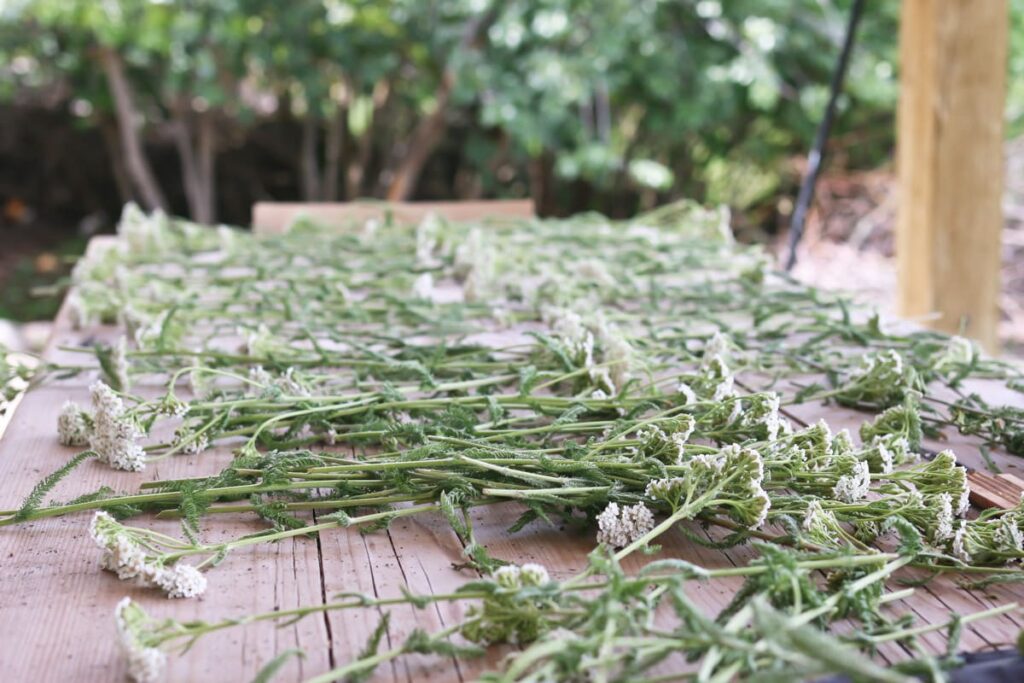
Yarrow (Achillea millefolium)
If there were an MVP for cold, stuck, and damp conditions, yarrow would be in the running.
Its bitter edge helps digestion (sluggish in cold folks). Its pungency helps circulation. And its lightness lifts foggy heads and heavy bodies. Herbalists describe yarrow as a warm, airy herb that helps move things upward and out.
Exactly the thing your body wants when you’ve been damp for five months straight.
Elderberry (Sambucus nigra)
Native to these lands and absolutely in sync with its climate, elderberry is the quiet sentinel in many Dutch herbal cabinets. You’ll find it fermented into syrups, boiled into teas, and snuck into kid-safe gummies.
It’s not just trendy immunity—elderberry is cooling, but deeply supportive, helping flush out viruses without adding more heat (which is useful in a climate where we’re usually cold, but occasionally get inflamed).
Lemon balm (Melissa officinalis)
Here’s where we get gentle. Because not all weather-driven symptoms are physical.
Lemon balm has become a go-to herb for mood and mind—especially during the long gray stretches when the sun is a myth. It’s mildly drying, gently uplifting, and oddly perfect for people who describe their winter mood as “slightly underwater.”
The Dutch Weather Profile: A (Very) Mild Clinical Case
Let’s pretend, for a moment, that the weather itself walked into an herbal clinic.
How would a practitioner describe it?
- Tissue state: cold + damp
- Movement: sluggish
- Mood: flat with occasional bursts of wind-driven irritation
- Main complaints: low-level congestion, sinus heaviness, low appetite, seasonal melancholy
It would be the patient who’s not quite sick, but definitely not thriving. The one who says, “I just feel off.”
And in response, the practitioner wouldn’t prescribe the newest adaptogen trend. They’d go straight for warming circulatory herbs, digestive bitters, respiratory decongestants, and nervines that dry foggy thoughts.
Exactly the herbs now slowly, quietly migrating to the front of Dutch shelves.
Why This Shift Matters
This might all sound obvious if you’re deep into herbalism. But here’s why it’s worth talking about:
Most people don’t pick herbs based on weather.
They pick based on marketing.
They hear turmeric is good for inflammation. So they buy turmeric. They read about ashwagandha for anxiety. So they get that too. And somewhere along the way, they forget to look at where they live, what their body feels like, and how their local climate shapes their constitution.
The herbal shift happening in the Netherlands is a reminder of something older, quieter, and more intuitive: that our environments are constantly influencing our internal ecosystems.
Herbs, when chosen well, aren’t just remedies. They’re weather responses.
How to Weatherproof Your Own Herb Cabinet
So—what does this mean for your own shelves?
Try this experiment:
- Open your tea drawer or herb stash.
- Count how many of these you have: ginger, thyme, elderberry, lemon balm, yarrow, mint, sage.
- Think back to how you felt last February. Or that damp stretch in June. Or the windy chaos of early spring.
- Now ask: Do your herbs match the weather’s impact on your body?
If they don’t, adjust. You don’t need 40 new tinctures. You need five herbs that match your climate’s patterns and your body’s needs.
Closing Thoughts: The Netherlands, in a Cup
The next time you make a cup of tea on a gray Dutch afternoon, pause for a second.
That’s not just a warm drink in your hands.
It’s a small act of adaptation. A botanical answer to a climate question. A quietly intelligent response to the invisible impact of your environment.
And maybe—just maybe—that thyme-and-ginger combo you’re sipping is your body’s way of saying:
“I live here. And I know how to live well here.”
The Herbal Forecast: Why Your Plants Should Match Your Climate
That’s exactly why we built The Herbal Foundations Course — to help you connect the dots between your herbs and your environment.
It’s a full-spectrum guide to understanding how plants interact with climate, constitution, and body systems — so you can choose herbs that actually fit where (and how) you live.
No hype. No jargon. Just grounded, climate-aware herbal knowledge that helps your cupboard make more sense.
If this story made you look at your tea shelf a little differently, the course is where you can go deeper.