The One Herb That Shows Up in Witchcraft, WWII, and Your Nighttime Tea
- Roland Koronya

The One Herb That Shows Up in Witchcraft, WWII, and Your Nighttime Tea
Every night, millions of people take the same little step before bed.
They make tea.
It’s hot. It’s soothing. It’s probably got a sleepy name like “Deep Rest,” “Dream Time,” or “Midnight Moon.” And somewhere near the top of the ingredient list—often in fine print—is a plant with an oddly medical-sounding name:
Valeriana officinalis.
Common name: Valerian.
To most, it’s just “the sleepy one.”
But valerian has lived a dozen other lives before it ever made its way into your bedtime mug. It has been a witch’s herb, a war-time sedative, a medieval perfume, and—at one point—the spiritual protector of entire villages.
It smells like gym socks.
It acts like a sedative.
And its history is absolutely wild.
Let’s start with the basics: What is valerian?
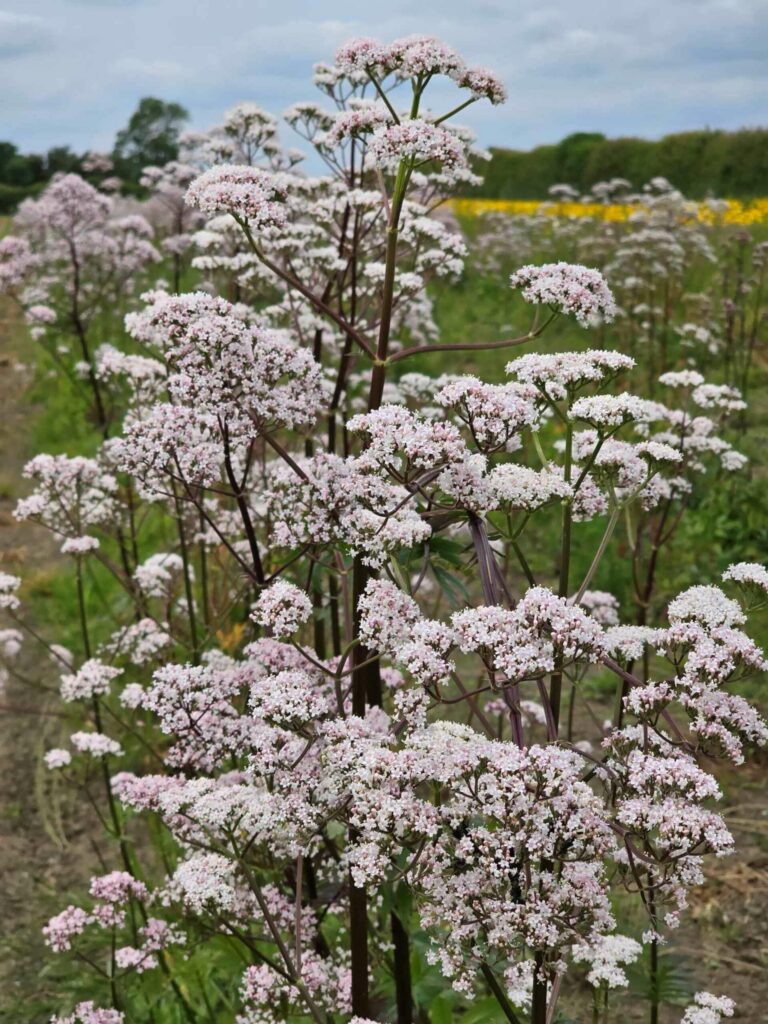
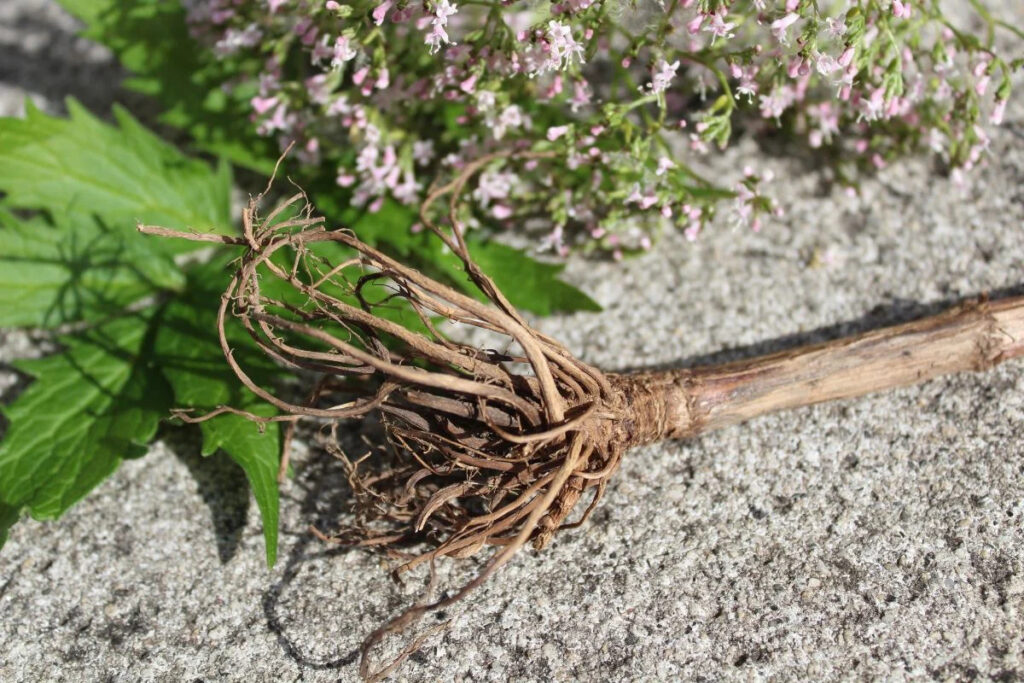
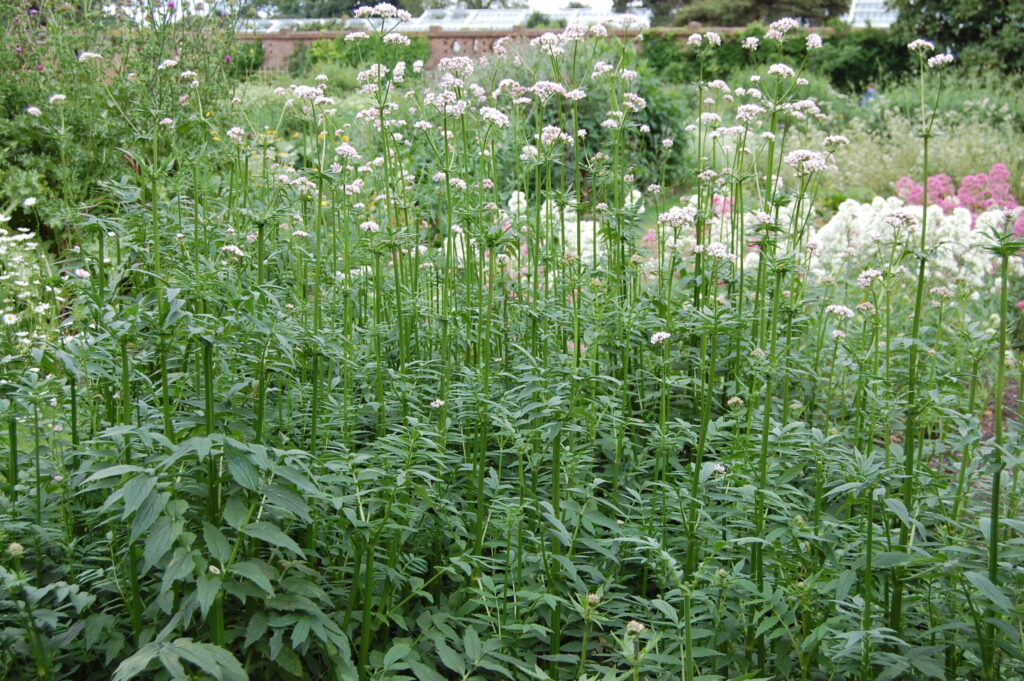
Valerian is a perennial flowering plant native to Europe and parts of Asia. It has tall stems, small pale pink or white flowers, and—most notably—a pungent, earthy root that smells like the inside of a wrestling shoe.
Botanically speaking, the part people use isn’t the flower, but the rhizome—that thick, gnarled root just under the soil. That’s where all the action is. That’s what goes into your tinctures, capsules, and sleepytime teas.
But here’s where it gets interesting.
Valerian doesn’t just help you sleep.
It doesn’t just “calm your nerves.”
It’s been shaping human rituals, survival strategies, and cultural beliefs for over 2,000 years.
Let’s take a closer look.
Witchcraft, Plague Doctors, and the Evil Eye
In pre-modern Europe, valerian wasn’t just a herb—it was a protective force.
In rural villages, it was hung above doorways, stuffed into sachets, or sewn into clothes to ward off the evil eye—that old superstition about curses cast by jealous neighbors.
During the Black Death, plague doctors filled their long, beak-like masks with aromatic herbs believed to ward off disease. Among them? Valerian root, praised for its strong smell, which was thought to drive away “bad air.”
In folk witchcraft, valerian was a staple ingredient. One old English charm advises hanging valerian in the stable to keep witches from bewitching your horses. Another recommends placing it in your pillow “to invite prophetic dreams.”
Its name even suggests power: Valeriana comes from the Latin valere — “to be strong” or “to be well.”
(And fun fact: it was sometimes called “All-Heal” by early herbalists. Not a modest nickname.)
How WWII Sent Valerian Into the Mainstream
Fast-forward to the 1940s.
During World War II, valerian wasn’t just for witches and dreamers anymore—it was a national remedy. In Britain, where bomb raids routinely shook cities, valerian became the herb of choice for nerves.
Pharmacies reported a massive spike in sales. British government pamphlets encouraged its use for “nervous tension.” And in rural areas, people harvested wild valerian to make their own tinctures at home. It was the kind of folk medicine that suddenly felt… incredibly practical.
In a 1941 issue of the British Medical Journal, doctors noted how valerian was used to calm children during air raids. And unlike stronger drugs, it didn’t knock people out—it just took the edge off.
Valerian had officially gone from magical herb to wartime essential.
But... does it work?
Let’s talk science.
Valerian contains several active compounds—most notably valerenic acid, valerenol, and a bunch of volatile oils—that are believed to interact with GABA receptors in the brain. That’s the same system targeted by anti-anxiety medications and sleep aids.
Studies are mixed (as herbal studies often are), but some research suggests valerian may:
- Shorten time to fall asleep
- Improve subjective sleep quality
- Reduce nervous tension and restlessness
- Be especially helpful for women going through menopause
One German study in 2000 found that 89% of patients taking valerian reported improved sleep—without the groggy hangover effect of pharmaceutical sedatives.
Still, herbalists know what science sometimes forgets: valerian doesn’t work the same on everyone.
Some people find it sedating. Others get wired. Some love the earthy smell. Others gag. And a small percentage of folks report vivid dreams, headaches, or even excitement—like valerian flips the wrong switch in their brain.
(One theory? These folks may be “liver stimulators,” or have certain genetic profiles that cause a paradoxical response.)
The Modern Rebrand: From Occult to Cozy
In the 21st century, valerian has traded its wartime and witchy roots for something far more marketable: sleep support.
It now appears in:
- Over 600 commercial herbal sleep products
- Nearly every “calm” or “relax” tea blend on the European market
- Bedtime gummies, sleepy tinctures, and even herbal bath bombs
And the Netherlands? It’s all in.
According to one Dutch health retailer, valerian root sales double during winter months, particularly around exam season, flu season, and the tail end of January—a month statistically associated with the lowest sleep scores across the country.
Why? Because valerian doesn’t just help with sleep. It speaks to a very specific kind of stress: the low-level, simmering, existential kind.
The kind you feel when your inbox is full, your bones are cold, and your to-do list still has seventeen unchecked boxes.
What Herbalists Say
Ask five herbalists how they use valerian, and you’ll get five different answers. But here are a few common threads:
- It’s best for folks who are wound tight, not worn out
- It works well in formulas with lemon balm, passionflower, or hops
- It doesn’t play well with alcohol or sedative meds
- And it’s not ideal for long-term daily use—short-term stress support only
One of my friends, who happens to be a clinical herbalist described valerian as “the herb you reach for when your nervous system is pacing the room in circles.”
That tracks.
So... should you try it?
If your nervous system feels like it’s on high alert—if your shoulders live near your ears, if your sleep is more like light dozing, if you’re calm in the morning and fried by 3PM—valerian might be worth a shot.
But start small. Try a low-dose tincture. Sip a cup of valerian + lemon balm tea an hour before bed. And for the love of all things botanical, don’t take it for the first time on a night when you really need to sleep.
Because valerian is a strange plant. A strong plant. A plant with a past.
And sometimes it wants to show you your dreams.
The Takeaway
Valerian is not trendy.
It doesn’t taste good.
It smells like something that fell behind the radiator in 2008.
But it’s been around for thousands of years—for a reason.
It helps people settle.
It smooths jagged edges.
It fills the space between chaos and calm.
And sometimes, when the world is loud and fast and too much all at once, that’s exactly what you need in a cup of tea.
Want to go deeper into the world of herbs that move the nervous system—without knocking you out or making you weirdly emotional at 11pm?
→ Keep reading. We’ve got more profiles coming.
Or, if you want to start understanding herbs like valerian from the ground up…
From Witchcraft to Wind-Downs: Learn the Real Roots of Herbal Medicine
Valerian is just one plant.
But the way we use it—how we prepare it, combine it, and understand it—reveals something bigger about herbalism: herbs are more than remedies. They’re culture, chemistry, and connection.
At The Herbal Conservatory, we built The Herb Dossier as a living archive of plants like valerian — a place to explore their stories, energetics, and uses beyond the surface.
If valerian caught your attention, the Dossier is where you can wander further.
You’ll find in-depth monographs on dozens of herbs — from the familiar to the forgotten — all grounded in both tradition and science.
Explore it here ↓ The Herb Dossier — a growing library for the curious herbal mind.