
Winter’s Warmth: Circulatory Herbs for Cold, Damp Netherlands Nights
- Roland Koronya

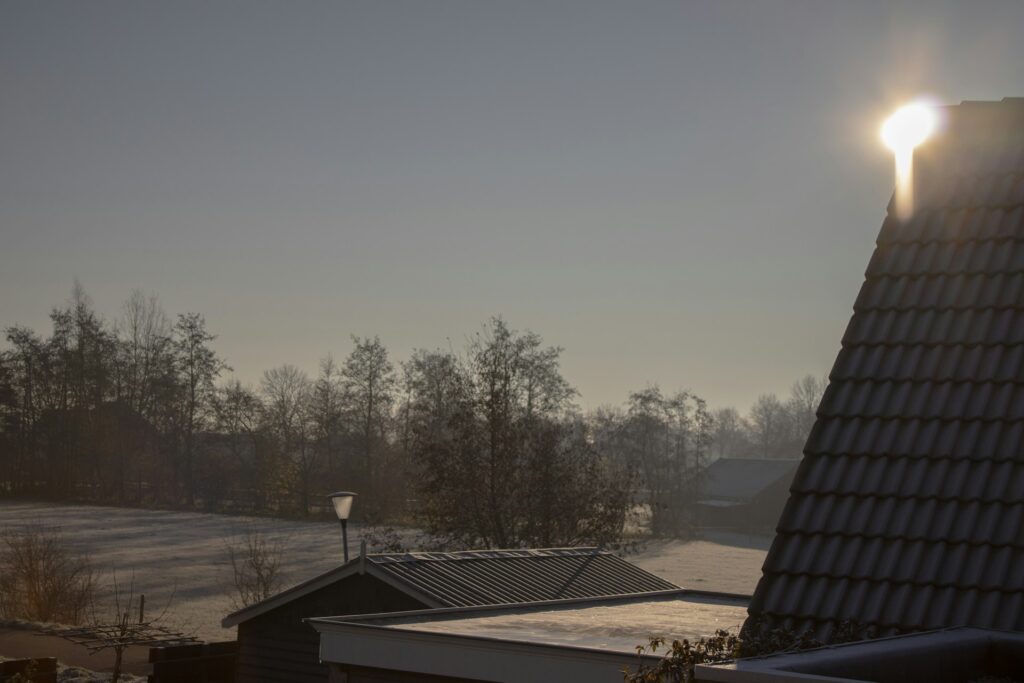
There’s a particular kind of cold that settles into Dutch bones sometime around November and doesn’t quite leave until April. It’s not the sharp, brittle cold of mountain winters or the dry freeze of continental climates. It’s something else entirely—a penetrating dampness that seems to seep through wool coats and double-glazed windows, settling into joints and lungs with a quiet insistence that no central heating can quite dispel.
Your Dutch grandmother knew this cold. And more importantly, she knew what to do about it.
The Intelligence of Damp and Cold
Here’s what’s curious: traditional European herbalists didn’t think of winter cold as merely an external inconvenience to be endured. They understood something more subtle—that the qualities of our environment don’t stop at our skin. Cold and damp outside create cold and damp inside. The body, in their view, wasn’t a sealed machine operating independently of its surroundings. It was—and is—an ecosystem in constant conversation with the larger ecosystem around it.
This matters more than it might seem. When we say “cold” and “damp” in the language of traditional herbalism, we’re not just describing temperature and humidity. We’re describing patterns, tendencies, states of being. Cold is slow circulation, pale skin, a metabolism that can’t quite get going in the morning. Damp is heaviness, swelling, the kind of stiffness that makes your knees ache when the weather turns. Together, they create what older herbalists called a tissue state—a constitutional pattern that, left unchecked, becomes the ground where illness takes root.
The Dutch winter is, energetically speaking, a cold and damp season. And the human body, when it lives through six months of this, tends to mirror it.
What Warmth Actually Does
The herbs your ancestors reached for weren’t chosen arbitrarily. Ginger. Cinnamon. Thyme. Rosemary. These weren’t just flavours or comforts—they were, in a very real sense, medicine matched to climate. Each of these plants carries what herbalists call a warming energetic. Not warm in the sense of temperature alone, but warm in the sense of movement, circulation, metabolic fire.
When you taste a slice of fresh ginger, you feel it immediately. There’s a pungency, a heat that spreads. That sensation isn’t incidental—it’s the plant’s volatile oils stimulating blood flow, encouraging circulation from your core to your periphery. In traditional herbal frameworks practiced across China, India, Greece, and yes, Northern Europe, this warming quality was understood as a counterbalance to cold. Not a suppression of symptoms, but a restoration of equilibrium.
Consider black pepper, perhaps the most ubiquitous spice in European kitchens. For centuries, it was worth more than gold, and not merely for flavour. Pepper moves blood. It warms digestion. It helps a cold, sluggish system remember how to metabolize, how to circulate, how to function. In Ayurvedic tradition, it’s considered one of the essential warming spices. In Traditional Chinese Medicine, its pungent nature is understood to disperse cold and invigorate the yang. In European folk medicine, it appeared in winter cordials and digestive bitters. Same plant, same recognition, different languages.
The pattern repeats. Cinnamon—sweet, pungent, warming—strengthens what the vitalist tradition calls the digestive fire. Rosemary, with its aromatic punch, stimulates circulation to the brain and extremities. Thyme, oregano, sage—the Mediterranean herbs that thrive in dry heat—all carry that same warming, drying signature. They’re not treating the cold; they’re meeting it with an opposite force.
A Quiet Adaptation
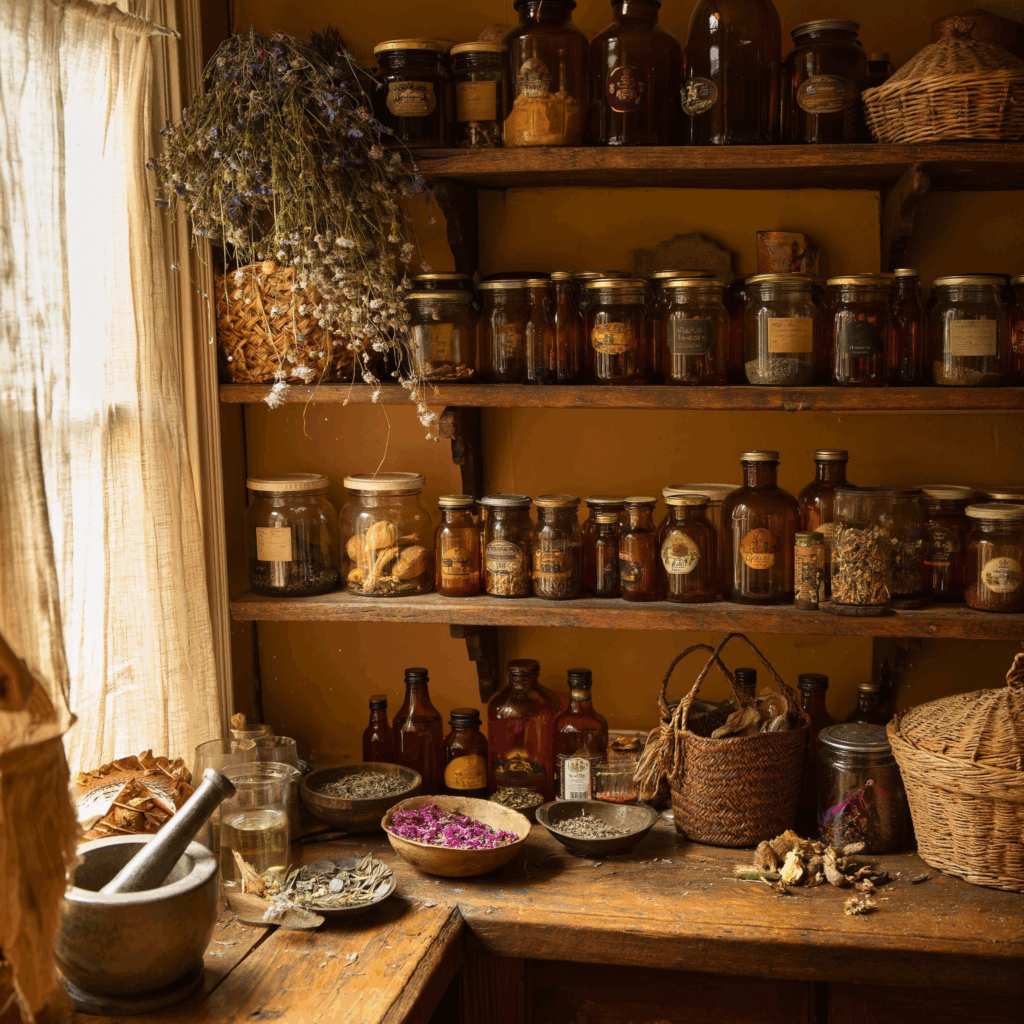
What’s remarkable is how little conscious thought this once required. Warming herbs were woven into daily life. Winter soups were built on onions, garlic, and root vegetables simmered with thyme and bay. Morning porridge was laced with cinnamon. Ginger appeared in breads and teas. The kitchen itself was a pharmacy, and the pharmacy looked like a kitchen.
Somewhere along the way, we began to think of herbs as supplements—capsules bought from shops, separate from food, taken only when something goes wrong. But the older way was different. It was a way of eating and drinking that assumed you’d need warming as the days grew short. Not because you were sick, but because you were alive, and alive in a place that asked certain things of your body.
This is seasonal living in its most practical form. It’s not about detoxing or cleansing or hitting reset. It’s about the simple observation that when the external world is cold and damp, the internal world needs warmth and dryness to maintain balance.
Bringing Warmth Home
So what does this look like in practice? It starts, perhaps unsurprisingly, with the morning.
A cup of hot water with fresh ginger and a stick of cinnamon. Not because it cures anything, but because it wakes up circulation. Because it tells your digestion, your metabolism, your blood—it’s time to move. This is the kind of thing you do before breakfast, not after symptoms appear.
Your cooking changes too. Winter meals become an opportunity. That pot of lentil soup? Add a few slices of fresh ginger while it simmers. Thyme, not as garnish, but as medicine hidden in plain sight. Rosemary roasted with root vegetables. Cinnamon stirred into your morning oats or coffee. Black pepper, generous and unapologetic, on nearly everything.
There’s an art to this—a knowing that comes from paying attention. Some people run naturally cold. They’re the ones always reaching for an extra sweater, always cold-handed. For them, warming herbs aren’t optional; they’re foundational. Others run warmer, and need less. This is constitutional awareness, and it matters.
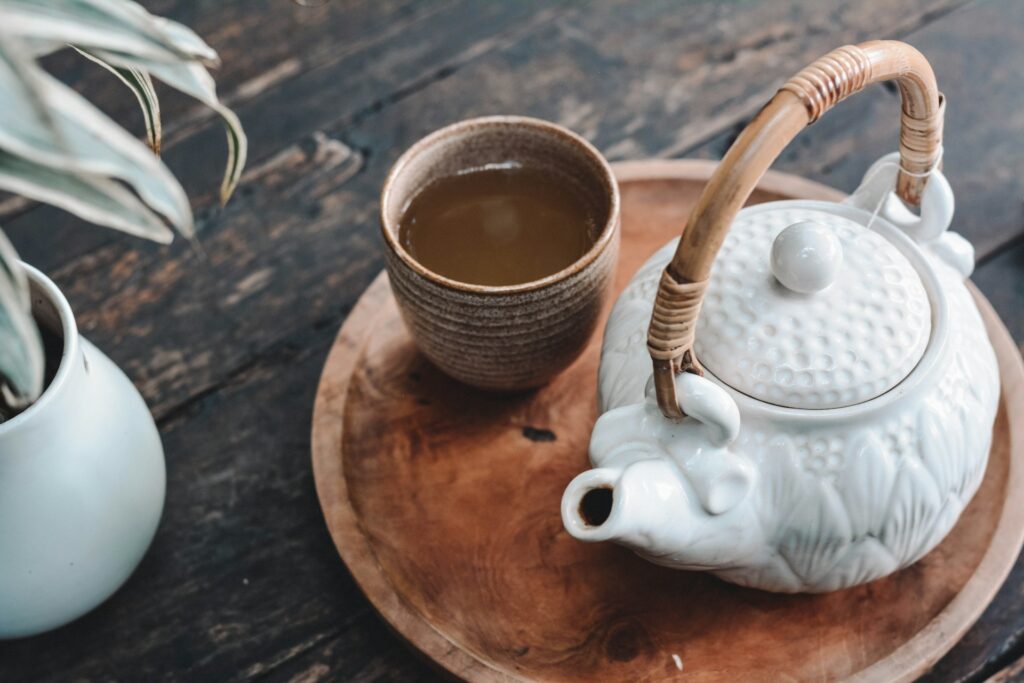
Teas and infusions offer another door. A simple evening blend: rosemary, a pinch of ginger, perhaps a bit of cinnamon bark, steeped for ten minutes. Drink it hot. Let it settle into your chest, your belly, your hands. This isn’t luxury; it’s an old conversation between plant and person, continued.
The Larger Pattern
Here’s where this becomes more than a collection of kitchen tips. What we’re really talking about is a way of seeing. A recognition that your body is not separate from the world it lives in. That the dampness in the air outside and the heaviness in your limbs inside are part of the same pattern. That plants, which also live in this climate, carry solutions shaped by the same forces.
This is the vitalist perspective—not a mystical idea, but a practical one. It suggests that health isn’t about fighting against nature, but about living skillfully within it. About noticing the season, noticing your body, noticing what shifts and what stays the same. And then, quietly, reaching for the herbs that balance the equation.
The herbs themselves are guides. They teach you to taste, to feel, to observe. Ginger teaches you what warmth feels like moving through your body. Thyme teaches you that pungency and heat often travel together. Cinnamon teaches you that sweet and warm can coexist. These aren’t abstract lessons. They’re physical, immediate, repeated with every cup, every meal, every winter.
And winter, in the Netherlands, asks this of you. It asks you to remember that you’re not a machine running on the same program year-round. You’re a living system in relationship with other living systems, and that relationship shifts with the tilt of the earth
An Old Way Forward
The knowledge isn’t lost, exactly. It’s still there in your grandmother’s kitchen, in the way winter soups are built, in the preference for hot drinks when the rain doesn’t stop for weeks. But the why has faded—the understanding that these aren’t just traditions or comforts, but intelligent responses to real physiological needs.
Learning to work with warming herbs is, in a sense, learning to read your own body’s seasonal language. It’s learning to feel when circulation needs encouragement, when internal cold has settled too deep, when the dampness outside has found its mirror inside. And then responding—not with urgency or intervention, but with the kind of daily, rhythmic support that prevents imbalance from ever taking hold.
This is herbalism at its most ordinary and most profound. Not exotic. Not complicated. Just warming spices in winter. Just paying attention to what your body actually needs, when it needs it. Just remembering that the plants growing in—or imported to—your bioregion carry within them the wisdom of living here, in this specific cold, this specific damp, this specific need for warmth.
If you find yourself curious about learning this language more deeply—the one that lets you read energetics in a plant’s taste, that helps you match herb to season to constitution—there are places to begin. Our Herbal Foundations Course explores these patterns slowly, building the kind of foundational understanding that makes herbalism feel less like memorization and more like conversation. It’s where the old ways of knowing meet your own direct experience, where theory becomes as real as the warmth of ginger spreading through your chest on a cold evening.
For now, though, the invitation is simpler. Notice the cold. Notice the damp. And then, perhaps, reach for something warming. Not because you’ve been told to, but because your body—if you listen—has been asking for it all along.