
Spring Dandelion vs. Autumn Dandelion: What Harvest Season Reveals About Plant Intelligence
- Roland Koronya

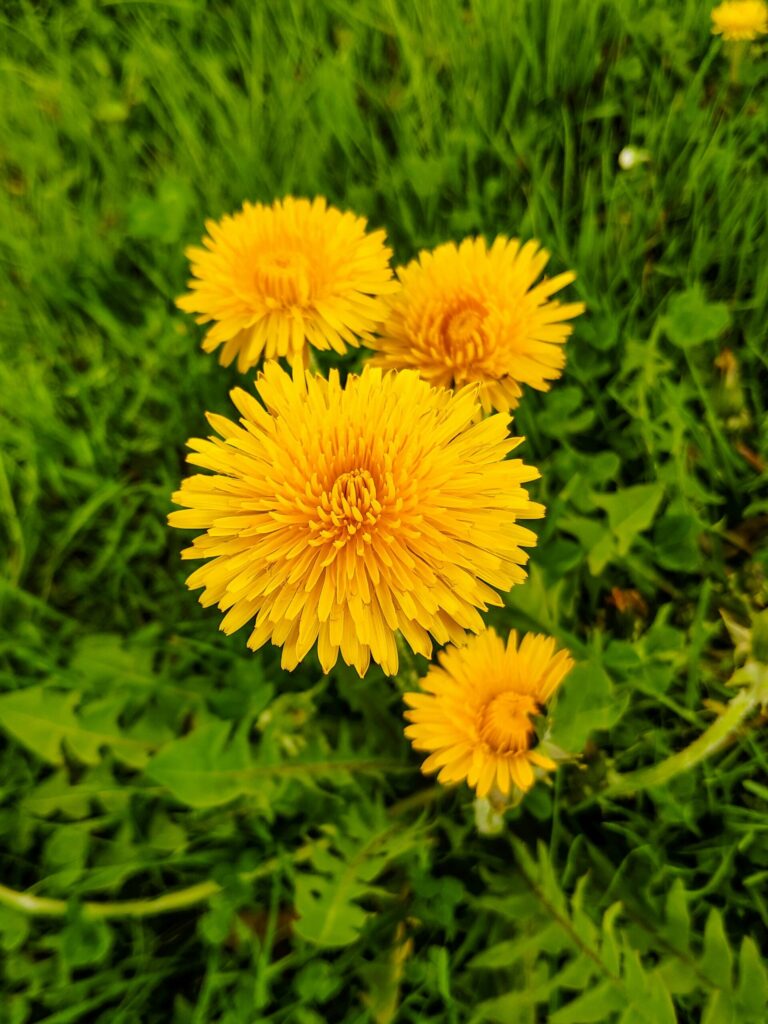
There’s a muddy corner of my neighbor’s garden where dandelions return every year with the stubborn insistence of old friends. Last April, I watched her dig up a few roots—pale, bitter things that smelled sharp and green when snapped. By October, I was out there myself, pulling what looked like the same plant from the same patch of earth. But when I broke the autumn root open, it was different: darker, denser, faintly sweet.
Same species. Same soil. Different medicine entirely.
Most people treat dandelion like it’s dandelion—a single, static thing that either belongs in a salad or on the compost heap. But traditional European herbalists knew something that modern convenience has trained us to forget: plants aren’t products. They’re living beings that shift and adapt with the seasons, concentrating different compounds at different times of year. And if you know when to harvest, you’re not just gathering an herb. You’re catching a plant in a particular moment of its intelligence.
The question is: what does dandelion know in spring that it forgets by autumn? And what does that tell us about the way healing actually works?
The Spring Root: Bitter Awakening
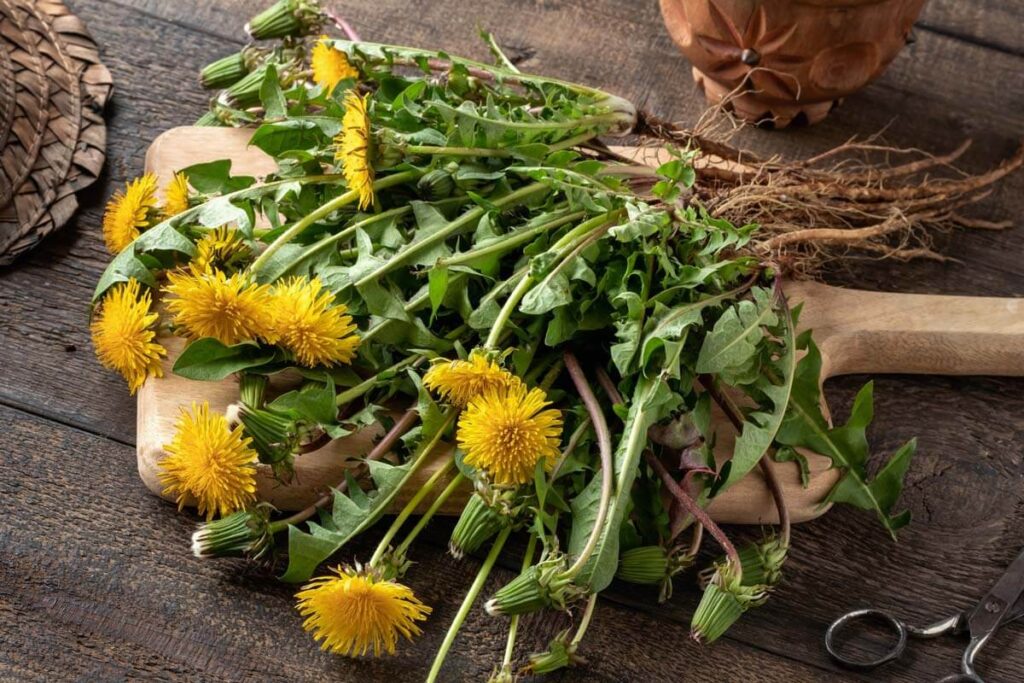
When you pull dandelion in April or May—just as the plant is waking from winter dormancy and preparing to flower—the root is concentrated with bitter compounds. Herbalists describe this as the plant’s “spring cleaning” phase, and it’s not metaphorical. Those bitter constituents—primarily sesquiterpene lactones—stimulate bile production in the liver and gallbladder, essentially giving your digestive system a gentle wake-up call after months of heavier winter foods.
This is the dandelion your European great-grandmother might have dug after the last frost, adding it to spring tonics or bitter salads. The bitterness isn’t an accident or an inconvenience. It’s the plant’s response to its environment: spring demands growth, expansion, outward movement. The root’s chemistry reflects that.
In traditional vitalist herbalism—the approach that sees the body not as a machine but as an ecosystem in constant dialogue with the world around it—spring dandelion root addresses a specific energetic pattern. It’s cooling and drying, making it useful for conditions where there’s stagnation, sluggishness, or what herbalists call “damp heat” in the liver. Think of it as the plant that helps move things along when your system feels stuck.
There’s something quietly elegant about this. The plant that emerges in spring, pushing through cold soil toward sunlight, carries the energetic signature of that push: upward, outward, stimulating. It teaches the body to do the same.
The Rise of Warming, Drying, and Moving Herbs
By September or October, after dandelion has flowered and gone to seed, the plant is doing something completely different. As daylight shortens and temperatures drop, the aerial parts die back. But underground, the root is preparing for winter by storing carbohydrates—primarily a prebiotic fiber called inulin. The bitter intensity softens. The root becomes sweeter, denser, more nourishing.
If you harvest dandelion root in autumn, you’re gathering a fundamentally different medicine. The same plant that acted as a spring stimulant now functions as a prebiotic gut tonic, feeding beneficial bacteria in the digestive system rather than simply moving bile. The energetic quality shifts too: autumn dandelion is less about clearing and more about building, less about stimulation and more about nourishment.
This isn’t a flaw in the plant or a sign that one harvest is “better” than the other. It’s evidence of intelligence—a responsiveness to seasonal cycles that human beings, with our year-round supermarkets and climate-controlled homes, have largely lost the ability to perceive.
The autumn root knows winter is coming. It prepares accordingly. And when we harvest it in that moment, we’re not just taking a substance. We’re learning from a strategy.
What This Tells Us About Timing
Here’s where it gets interesting: traditional European herbalism didn’t just notice these differences. It built entire systems of practice around them. The same plant, harvested at different times, was used for different purposes—not because herbalists were making arbitrary distinctions, but because they were paying attention to what the plant was actually doing.
This is the opposite of the modern approach, which tends to view herbs as fixed entities with static properties. Dandelion root = liver herb. Burdock = blood cleanser. One size fits all, any time of year. But this flattens the complexity of the plant’s life cycle and, by extension, our own.
When vitalist herbalists talk about “learning from nature,” this is partly what they mean: observing the patterns that exist outside industrial time, outside convenience, and recognizing that those patterns contain useful information. The plant that thrives in your garden in October has adapted its chemistry to match the season. Maybe you should too.
The Intelligence Beneath the Surface
There’s a concept in traditional herbalism that modern medicine tends to dismiss: the idea that plants possess a kind of wisdom, an organizing intelligence that goes beyond chemical constituents. This isn’t mysticism—or at least, it doesn’t have to be. It’s pattern recognition.
Dandelion doesn’t consciously decide to concentrate bitters in spring and sugars in autumn. But through millennia of evolutionary adaptation, the plant has developed a survival strategy that responds to seasonal cues: temperature, light, moisture. What we’re seeing when we harvest at different times isn’t randomness. It’s coherence. The plant’s chemistry aligns with its environment in ways that are both measurable and meaningful.
This is what herbalists mean when they talk about plants as teachers. Not that dandelion whispers secrets in the garden, but that by observing how it adapts—by noticing what it concentrates when, and why—we can learn something about our own relationship to seasonal cycles. We can remember that human bodies, like plant bodies, are responsive systems rather than static machines.
In Northern Europe, where seasonal shifts are pronounced and undeniable, this feels especially relevant. The body that needs support in February—cold, damp, contracting—isn’t the same body that emerges in May, light-hungry and expansive. And yet we often reach for the same remedies, the same foods, the same routines regardless of the season.
Dandelion invites us to reconsider.
Choosing Your Moment
So when should you harvest? The answer, unsatisfyingly, is: it depends on what you need.
If you’re after liver support, digestive stimulation, or a bitter tonic to shake off winter sluggishness, spring is your season. Dig the roots just before or as the plant flowers, when those bitter compounds are most concentrated. The traditional European approach was to harvest in early morning, when plant vitality is highest—though honestly, whenever you can get your hands in the soil is probably fine.
If you want a prebiotic, gut-nourishing root with a milder flavor, wait for autumn. Harvest after the plant has seeded and the aerial parts have died back, ideally after a few frosts when the root’s energy has fully descended. This is the dandelion you’d add to winter soups or roast as a coffee substitute.
Both are medicine. Both are useful. But they’re not interchangeable, and pretending they are misses the point entirely.
The Rhythm We've Forgotten
Walk through a city in January and you’ll find strawberries from Spain, tomatoes from Morocco, herbs shipped in from climates that bear no resemblance to the one outside your window. This is convenience. It’s also a kind of forgetting.
Traditional European herbalists didn’t have access to year-round supply chains. They harvested what was available when it was available, and over generations, they learned to read the plants. They noticed that spring nettles have a different sting than autumn nettles. That elderflowers in June work differently than elderberries in September. That the same patch of earth offers different medicines depending on when you show up.
This wasn’t superstition. It was observation—the kind that requires patience and a willingness to let the plant lead.
We don’t have to return to a pre-industrial way of life to benefit from this knowledge. But we might consider what it means to eat and heal in rhythm with the place we actually live. To notice which plants are thriving when, and to ask what that timing reveals. To stop treating herbs like isolated chemicals and start seeing them as part of a conversation between plant life, soil, weather, and season.
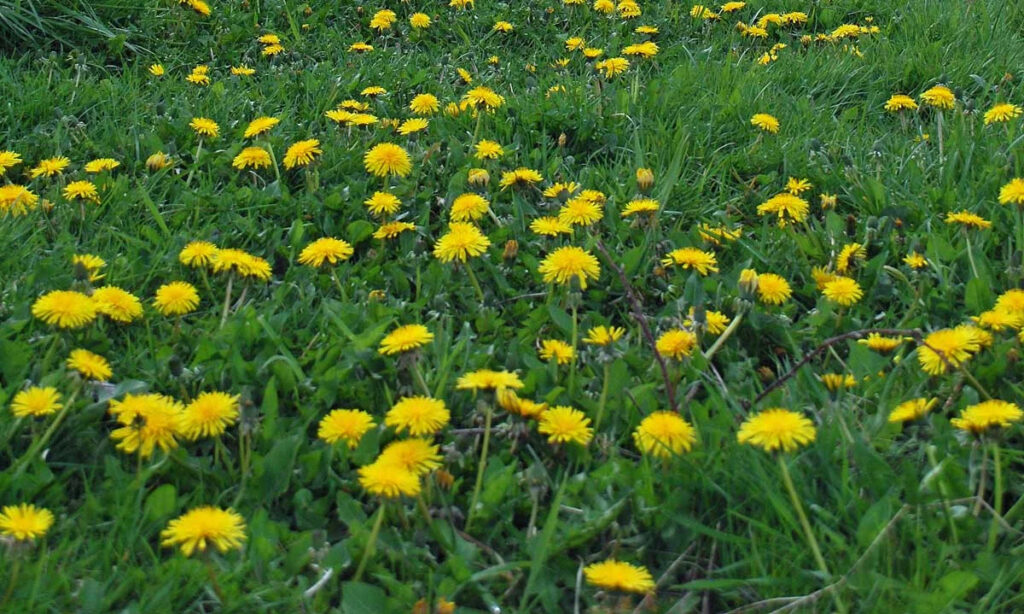
Dandelion, growing stubbornly in that muddy corner of the garden, is already having that conversation. The question is whether you’re listening—and whether you’re willing to slow down enough to learn the language. These patterns, the ones our grandmothers knew by heart, are what we return to slowly in our Herbal Foundations Course, where reading plants becomes less about memorizing properties and more about recognizing the intelligence that’s been there all along, growing quietly in European soil.